
Two questions come up before anything else. Whose fault was it, and what is this going to cost me to find out.
Georgia runs on a fault-based system, so the driver who caused the wreck, and that driver's insurer, pays for the damage that follows. That part rarely surprises anyone. What surprises my clients is what happens the moment fault gets split between two drivers, because Georgia does not divide it the way most people assume.
The second question has a shorter answer. Calling me costs you nothing. I've had people in my own community here in Savannah tell me they held off on picking up the phone until somebody else explained that to them, and that's a hesitation I'd like to put to bed early in this book.
Everything you go through on a contingency fee basis is free until there's recovery. Even if it takes five years, and we're hiring experts and spending a lot of money on your case, you're never spending a dime unless and until there's recovery.
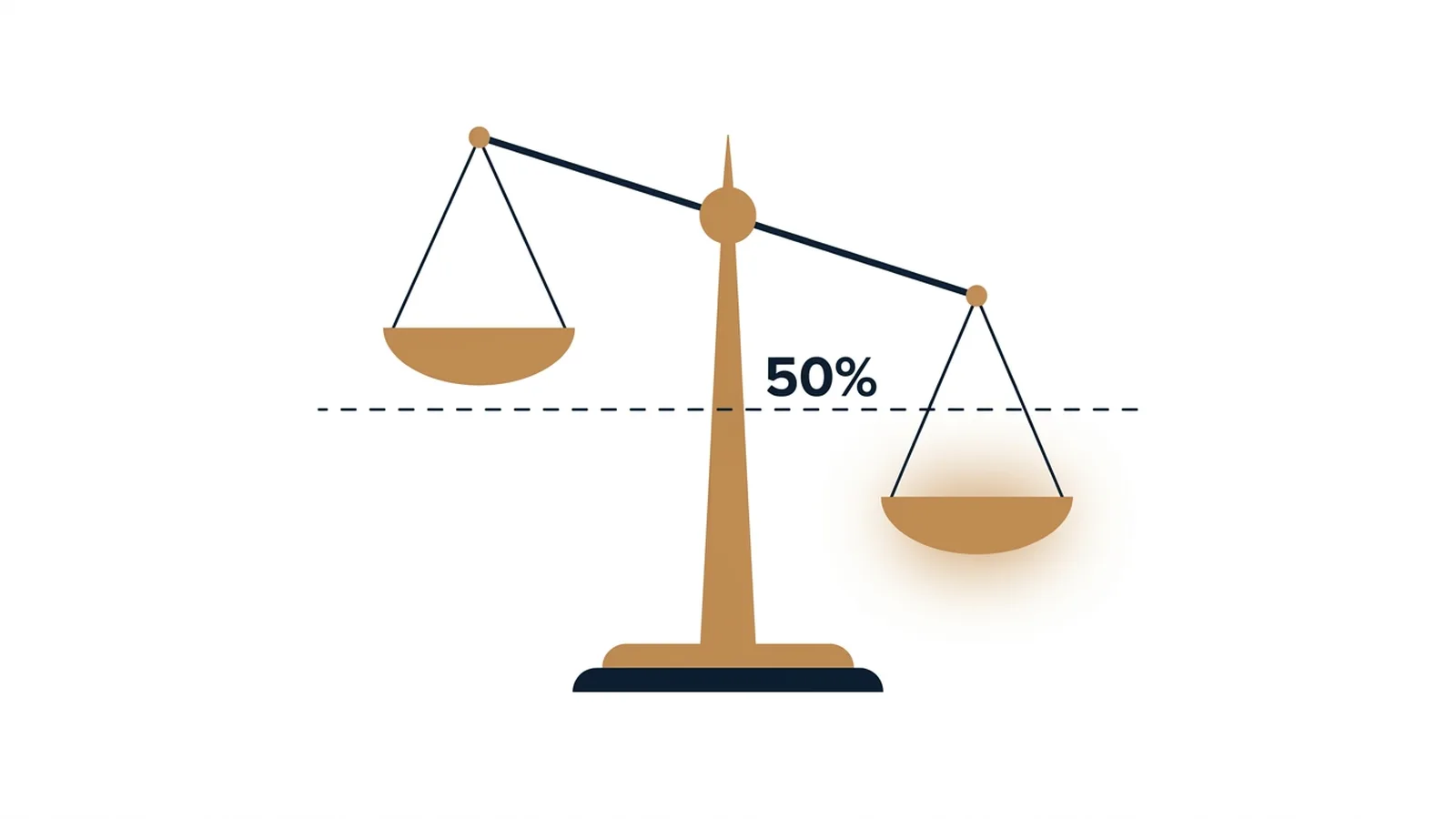
Why fifty percent means zero
I work under Georgia's modified comparative negligence rule, O.C.G.A. § 51-12-33. Here is what it does to a claim.
A jury can decide both drivers played some part, and your recovery drops by whatever share of the fault lands on you. Say your case is worth a hundred thousand dollars and the jury puts twenty percent of the blame on you, in which case you recover eighty thousand. That much is arithmetic, and I think most people follow it without any trouble.
The part that catches people is the cliff at the end, because at fifty percent you don't recover a reduced amount, you recover nothing. So what I like to say is that in Georgia, fifty percent equals zero. At 49.99 percent you still have a case, and one hundredth of a point later you don't.
Now, that cliff is why an adjuster's first move is so often an attempt to slide some percentage of the blame onto you. Every point they assign to you comes off the number, and enough points end your claim before it ever starts. That isn't a hostile read of their job, either. An adjuster is paid to manage what the company pays out, not to make you whole, and those are two different assignments even when the phone call sounds friendly.
There is one argument I see more than any other. If nobody independent saw the wreck, they will push for an even split, because they know exactly what a fifty-fifty finding does. The other favorite is a gap in your treatment: you didn't mention your shoulder at the February visit, so the shoulder must not have been hurting in February. Neither of those reflects how people behave after a frightening event. Twelve people in a jury box tend to understand that intuitively. An adjuster whose job depends on paying less usually does not.
The coverage nobody explains until the day you need it
Georgia requires drivers to carry at least twenty-five thousand dollars in bodily injury coverage per person and fifty thousand dollars per incident. Not everyone complies with that law. And plenty of the drivers who do comply are carrying exactly the minimum and nothing above it. When the at-fault driver's policy is that thin, the size of their coverage can end up capping what you collect from them, no matter how badly you were hurt.
That gap is what the next piece of your own policy exists to close, and most of my clients have never heard of it until the day they need it. Insurance companies are in no hurry to walk you through it.
Uninsured and underinsured motorist coverage is something you buy on your own automobile policy. It pays when the driver who hits you has no insurance, or not enough of it. Say your claim is reasonably worth a hundred thousand dollars and the at-fault driver carries the twenty-five-thousand-dollar minimum. If you bought seventy-five thousand in uninsured motorist coverage, you collect twenty-five from their carrier and seventy-five from your own.
Here is the part worth acting on this week. Under Georgia law your insurer has to give you uninsured motorist coverage matching your liability limits automatically, unless you sign a specific document waiving it. It's called a selection or rejection form. Carriers will sometimes nudge you toward signing it because it shaves a little off the premium. It does save you a little, and that little is nothing next to what it costs you the day somebody with no insurance hits you. So go look at your declarations page before anything ever happens to you. If the coverage isn't on there, it is cheap to add, and I recommend it to every single person who asks me.
This same coverage is what protects you when the other driver never stops at all. I've had cases where someone fled the scene, on multiple occasions actually. Sometimes the police catch up with them, and that is a good thing for your case, because fleeing can open the door to a claim for attorney's fees or punitive damages. Other times nobody ever finds them. You can pull footage from nearby gas stations and businesses and hunt for a plate, and I have found people that way. But sometimes the video isn't there and the police can't close the gap. When there is no driver to identify, there is no policy to pursue, and your own uninsured motorist coverage is the only thing left standing between you and nothing. It's the same coverage doing the same job, whether the other driver had no insurance or no name.
Why an adjuster calls you in the first week
I get calls constantly from people who tell me an adjuster already offered them a couple thousand dollars, sometimes within days of the wreck. "Progressive called and offered twenty-five hundred. What should I do?"
The first thing I say is that we should investigate before anyone answers that question. Almost every single time, that number is far below what the claim is worth, and the company knows it. They're betting that you won't investigate and that you won't hire an attorney. An early offer isn't an opening position so much as a hope that the file closes before anyone looks at it.
Part of what happens next is something clients never see. Insurance companies evaluate a claim against their own internal criteria, and describing seven or eight problems in your own words does not land the same way as those identical facts translated into the categories an adjuster is trained to weigh. I speak their language, so I know what they're looking for in your file and how to put what's happening to you in front of them in a form they have to price. That translation is a large part of why the same facts produce very different outcomes depending on who's presenting them.
I hear a version of the same hesitation constantly in this community, whether the injury came from a bicycle crash or a construction site. People assume that calling a personal injury attorney costs something, so they wait far longer than they should to find out otherwise.
It doesn't, and I want to be specific about why. I evaluate cases every day, and sometimes I tell somebody it isn't a case for me, or that it may not be a case at all. That's fine, and you lose nothing by asking. And if I do take your case, I front what it costs to build it: the experts, the trips out to the scene, the reconstruction work. If there's ultimately no recovery, I never ask you to pay any of that back. Those are costs I eat. That is the whole reason there's no downside to finding out where you stand, even when you're not sure your situation is serious enough to bother a lawyer about.
The demand, the lawsuit, and what litigation looks like
Once you've finished the bulk of your treatment, or at least reached a point where the medical picture is clear, the next step is usually a demand to the at-fault driver's insurer. Often that demand is for the policy limits, because so often the limits are only twenty-five thousand dollars to begin with. The company then has thirty to forty-five days to accept it or turn it down.
What makes that window produce a real number instead of a stall has less to do with the letter than with the file behind it. Defense attorneys know which lawyers are prepared to try a case and which ones they can catch flatfooted at the last second and get a discount from. So I prepare every single case as if it's going to trial. I don't let myself believe it will settle. Ducks in a row, the right experts, the right research, the right depositions taken. If it settles after that, wonderful, because working a case up as though it's going to a jury is frankly the best way to settle it.
When a demand gets rejected, filing suit is usually the next real step. Georgia uses notice pleading, so the lawsuit only has to put the other driver on notice of the claims against them, which is a lower bar than people expect. Once you file, the insurance company is contractually obligated to hand that driver a defense attorney. They have to; it's in the contract they signed. So anyone trying to handle a lawsuit alone is walking into a room with a seasoned defense lawyer on the other side and nobody on theirs.
By statute you then get 180 days of discovery after the defendant answers the complaint. That means written questions each side has to answer, requests for documents, and sworn statements from the drivers and the witnesses. A Georgia car wreck case usually runs six months to a year of active litigation, though it can stretch to a year and a half or two, and often that has nothing to do with your lawyer. Sometimes we are simply at the mercy of a judge's calendar, and the court is too overloaded to give us a trial date.
No two cases run the same. Some resolve after a handful of depositions, just the drivers and maybe a treating physician. Others carry dueling accident reconstructionists, several medical experts, and a much longer runway. Either way it can be grueling on the person living it, sitting in a deposition room reliving a wreck a year or two after it happened. I weigh that when you and I are deciding whether a fair number now is worth more to you than a verdict that might be larger and costs you another eighteen months to reach.
Two deadlines that can end a claim on their own
Two deadlines matter more than any fault percentage or insurance limit in your case, because missing either one ends the claim before those questions ever get asked.
The first is the one most people have heard of. Georgia gives you two years from the date of the wreck to file a lawsuit. South Carolina gives three, and some states give one, so a deadline a friend in another state repeats to you with total confidence may simply not be your deadline.
There are narrow exceptions, and I would never let you build a strategy on one. Georgia law does pause the two years while a traffic citation from the scene sits unresolved, so if the other driver takes three months to pay it, you get two years and three months. It's nuanced, though, and it doesn't always work that way. A recent appellate ruling limited that extension to the person who was actually in the wreck. If that person later dies and the family brings a wrongful death claim, the family does not get those extra months, even with the same citation still sitting in traffic court. Treat two years as the real number and let any exception be a pleasant surprise. You will never get in trouble for filing early.
The second deadline is a cousin of the statute of limitations, and it's the one almost nobody knows about until it has already cost them. Your uninsured motorist coverage is a contract with your own insurer, and that contract usually requires you to report a wreck inside a set window. It could be thirty days, or three months, or six months, or a year. Miss it, and the policy says they don't owe you the coverage you paid for.
I have clients come to me a year and a half in who still have a claim against the other driver, and whose own uninsured motorist coverage may no longer apply, because nobody ever called their carrier. So call yours the same week. Not after treatment ends, not after a demand goes out. Set up the claim, or have an attorney do it for you. It costs nothing and it closes that risk permanently.
Common Questions
- What does it mean that Georgia is a modified comparative negligence state?
- It means fault gets divided, and your share comes off your recovery. A jury can reduce an award by the injured person's percentage of fault, but a person found fifty percent or more at fault recovers nothing at all under O.C.G.A. § 51-12-33. So at twenty percent fault a hundred-thousand-dollar case pays eighty thousand. At fifty percent it pays nothing. Fifty percent equals zero.
- Why would an insurance company try to argue I was partly at fault?
- Because every percentage point they hang on you comes straight off what they pay, and enough points end the payout altogether. Watch for the even-split argument when there were no independent witnesses, since they know a fifty-fifty finding pays you nothing. Watch for the gap-in-treatment argument too, where not mentioning an injury at one appointment becomes proof it wasn't happening.
- Does hiring an attorney cost money up front?
- No. A contingency arrangement means the firm is paid a percentage of the recovery, and only if there's a recovery. The consultation is free whether or not I take the case. I also front the costs of building it, the experts and the investigation, and if the case doesn't recover, I don't ask you to pay those back. You pay yourself first, and you pay me out of what comes in.
- What is uninsured or underinsured motorist coverage, and do I already have it?
- It's coverage on your own auto policy that pays when the at-fault driver has no insurance or not enough to cover your claim. Georgia law requires insurers to include it automatically at your liability limits unless you signed a form rejecting it, so it's worth checking your declarations page to see whether you have it and how much. It also covers you when the driver flees and is never identified.
- What happens if the insurance company ignores my demand letter?
- An insurer usually has thirty to forty-five days to respond to a policy-limits demand. If that window passes without a fair response, filing a lawsuit is usually the next step, and Georgia law then requires the insurance company to provide the other driver with a defense lawyer. After that driver answers, both sides get 180 days of discovery by statute.
Chapter Reflection
A fault percentage sounds like a technicality right up until it's the number deciding whether your claim pays anything at all. Fifty percent equals zero, and nobody tells you that while you're standing in the road deciding how much to say. The cost question deserves the same plain answer. Nothing you do in this process comes out of your pocket, and the only thing that hesitation buys the insurance company is time. What neither of those questions settles is the one every claim actually turns on: what the record says happened out there. The next chapter starts with the document an adjuster reaches for first.